
What Makes Cast Iron Ideal for High-Temperature, Industrial Environments
Some materials earn their place in industry. Cast iron is one of them.
It's not trendy. It's not new. It's been the backbone of industrial heating applications for well over a century — and it's still here because nothing has come along to replace what it does better than everything else. Durability, heat retention, longevity. Let's break down exactly why cast iron belongs in demanding, high-temperature industrial environments.
Durability That Doesn't Quit
Industrial environments are unforgiving. Equipment faces mechanical stress, thermal cycling, vibration, chemical exposure, and the kind of daily punishment that destroys lesser materials over time.
Cast iron handles it.
The graphite microstructure within cast iron gives it exceptional compressive strength — meaning it resists deformation under heavy loads and sustained pressure without degrading. It doesn't bend, warp, or creep under thermal stress the way softer metals do. It absorbs vibration rather than transmitting it, reducing mechanical fatigue across connected components.
Where other materials show wear, cast iron shows up to work again tomorrow.
It's also highly resistant to oxidation at elevated temperatures. In environments where heat is constant and exposure is relentless, that resistance means cast iron components maintain their structural integrity long after alternatives have begun to fail.
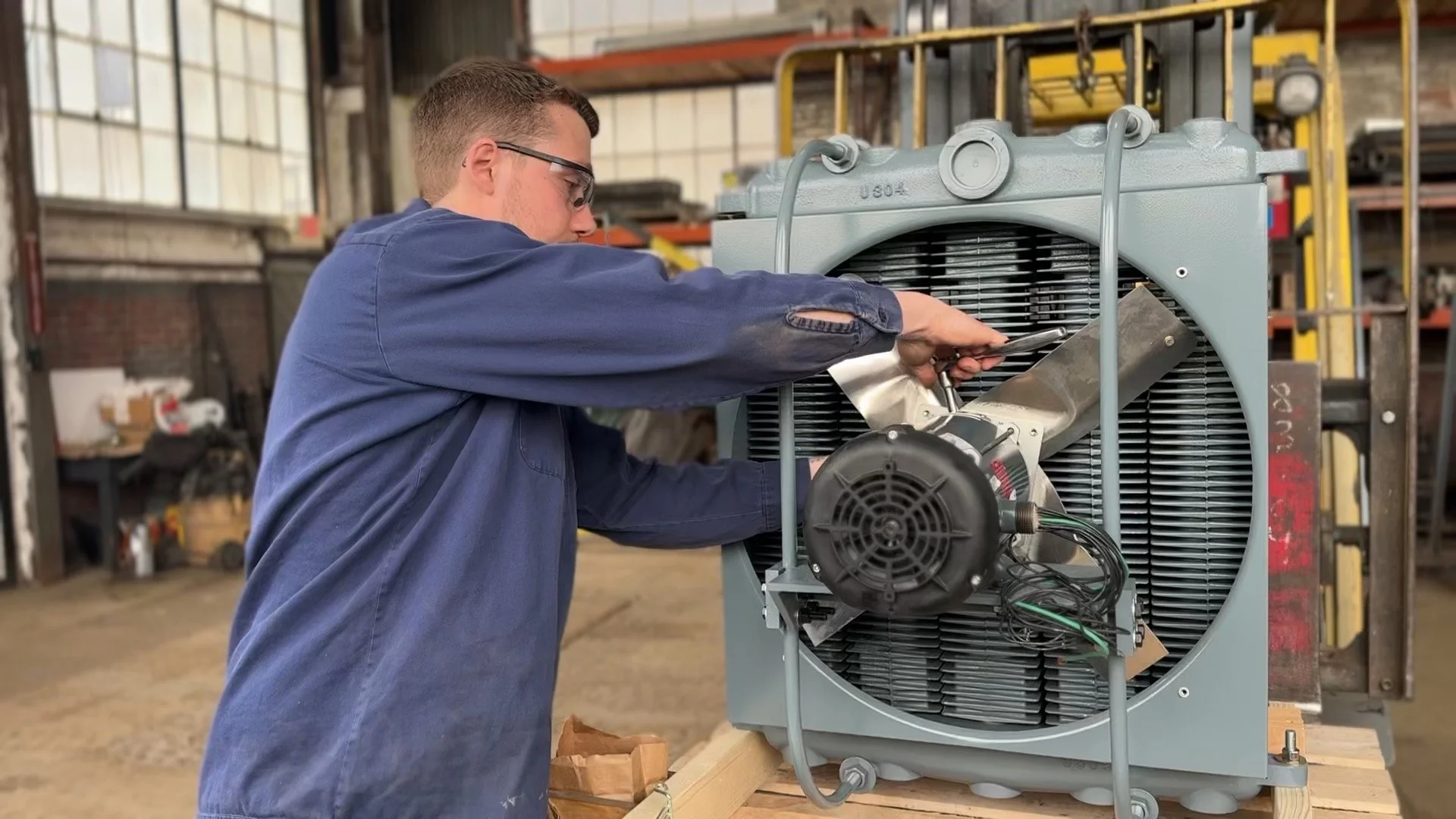
Heat Retention That Works for You
This is where cast iron separates itself from the pack.
Cast iron has a high thermal mass — it absorbs large amounts of heat energy and holds it. In industrial heating applications, this isn't just a nice property. It's a fundamental performance advantage.
Consistent, even heat distribution. Rather than creating hot spots that stress components and produce uneven output, cast iron distributes heat uniformly across its surface. In processes that demand precise, stable temperatures, that consistency is critical.
Thermal stability under load. When demand increases or operating conditions fluctuate, cast iron doesn't spike and crash. Its heat retention properties act as a buffer, maintaining stable temperatures and reducing the swings that can compromise process quality or equipment integrity.
Efficiency through retention. A material that holds heat well requires less energy to maintain operating temperature. In industrial applications running continuously or across long shifts, that efficiency compounds. Less energy input for the same — or better — output.
Other metals conduct heat quickly and lose it just as fast. Cast iron holds what it generates and puts it to work.
Longevity Built Into the Material Itself
Replacement costs money. Downtime costs more.
Cast iron is one of the most long-lived materials in industrial use — not because it's been engineered with a short service life in mind, but because its physical properties simply resist the mechanisms that cause failure in the first place.
It doesn't corrode rapidly. In high-temperature environments, cast iron forms a stable oxide layer that actually protects the underlying material from further degradation. It's not immune to corrosion, but it outlasts most alternatives in dry, high-heat conditions by a significant margin.
It machines and resurfaces well. When cast iron components do show wear over years of service, they can often be reconditioned rather than replaced — a significant cost advantage in large industrial installations where replacing major components means major expense.
It holds up through thermal cycling. Repeated heating and cooling is one of the most destructive forces on industrial equipment. Cast iron's structure tolerates thermal cycling far better than materials that expand and contract more dramatically, reducing the risk of cracking, warping, or joint failure over time.
When you install cast iron in an industrial heating application, you're not buying a component with an expiration date. You're making a long-term infrastructure decision.
The Bottom Line
Cast iron isn't the default choice for high-temperature industrial environments because it's cheap or easy. It's the default choice because it works — consistently, reliably, and for a long time.
Durability under mechanical and thermal stress. Heat retention that delivers stable, efficient output. Longevity that makes it one of the lowest total-cost-of-ownership options in industrial heating.
The physics don't lie. Cast iron earns its place.
At Cast Iron Heaters, we build on that foundation. Our products are engineered for the industrial environments where performance is mandatory and failure isn't an option.
👉 Visit castironheaters.com to explore our full line of industrial cast iron heating solutions and put the material to work for you.
Built from the ground up. Built to last.
— The Cast Iron Heaters Team