
Why Steam Remains a Powerful Industrial Heating Source
Steam is uniquely suited for industrial environments. It carries a large amount of energy in a relatively small volume. When steam condenses, it releases latent heat rapidly and efficiently. This makes it one of the most effective ways to transfer thermal energy across long distances in a plant.
Unlike electric heating elements that can create hot spots or combustion systems that require direct fuel sources, steam systems provide consistent, uniform heat distribution. That consistency matters in applications like:
Metal casting and foundries
Chemical processing
Surface treatment and finishing
Because steam systems are typically centralized, facilities can generate steam in one location and distribute it throughout the plant. This improves energy efficiency and simplifies maintenance compared to multiple independent heating systems.
Energy Efficiency and Heat Transfer Advantages
One of the primary reasons companies choose an industrial steam heater is efficiency. Steam carries significantly more usable heat energy per pound than hot water or forced air systems.
When steam condenses, it releases latent heat instantly. That phase change—from vapor to liquid—is what makes steam heating so powerful. It allows facilities to:
Achieve faster heat-up times
Maintain consistent temperatures
Because steam transfers heat so efficiently, heater surfaces do not need to reach extreme temperatures to deliver high output. This reduces material stress and extends equipment life.
In high-demand environments like foundries or forging operations, fast recovery time is critical. If a production line cools down, restarting can be costly.
Grid Industrial Steam Heaters: Engineered for Even Distribution
Grid Industrial Steam Heaters
Grid industrial steam heaters are specifically designed to maximize heat distribution across wide areas. Instead of concentrating heat in a single zone, the grid layout allows steam to circulate through multiple channels arranged in a structured pattern.
This grid configuration provides:
Uniform heat output
Reduced temperature gradients
Better airflow interaction
Improved efficiency in large spaces
In warehouses, manufacturing floors, and large industrial bays, uneven heating can create operational challenges. Cold spots may impact production quality or worker comfort. Grid industrial steam heaters eliminate these inconsistencies by distributing heat evenly throughout the coverage area..
Grid Industrial Steam Heaters in High-Heat Manufacturing
Grid Industrial Steam Heaters
High-heat manufacturing environments—such as casting operations, metal forming facilities, and heavy fabrication plants—require equipment that can handle sustained thermal demand without failure.
Grid industrial steam heaters excel in these settings because they:
Handle continuous steam flow
Withstand high operating pressures
Support large-scale process heating
In facilities where temperature precision directly impacts product quality, consistency is everything. Grid systems provide predictable heat profiles, which are critical for drying, curing, or preheating operations.
Grid Industrial Steam Heaters and System Longevity
Grid Industrial Steam Heaters
Longevity is one of the most important factors when selecting industrial heating equipment. Downtime is expensive. Replacing failed heaters disrupts operations and can cause cascading delays.
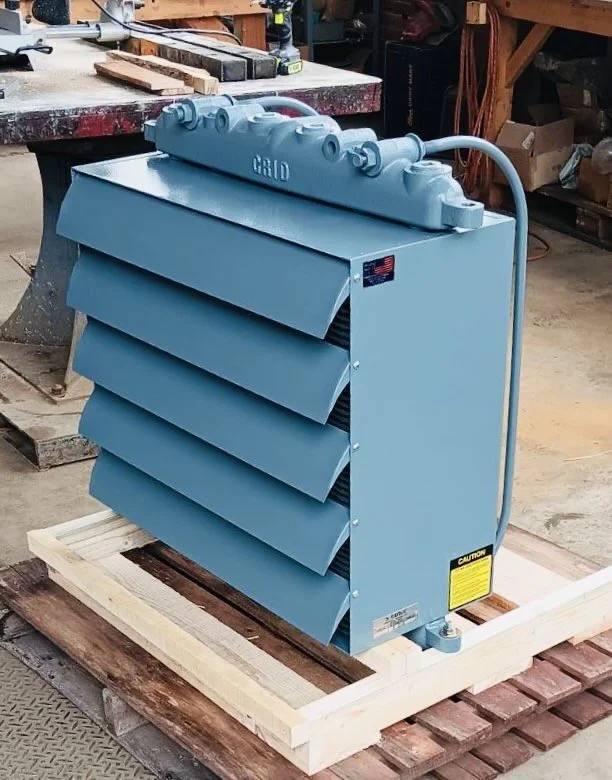
Grid industrial steam heaters are designed for extended service life. The distributed internal design reduces stress concentrations, while heavy-duty construction materials resist fatigue and corrosion.
Additionally, steam heating systems are often easier to maintain than electric or combustion-based systems. Routine inspections, condensate management, and proper pressure regulation keep systems operating smoothly for years.
When engineered correctly, an industrial steam heater can provide decades of reliable service.
Safety and Control Benefits
Safety is always a top priority in industrial environments. Steam systems offer several built-in safety advantages when designed and maintained properly.
Because steam heaters do not rely on open flames at the point of heat delivery, they reduce fire risk in sensitive environments. Centralized boilers can be monitored and controlled more easily than multiple decentralized combustion units.
Modern industrial steam heater systems also integrate with automated controls that regulate:
Steam pressure
Temperature output
These controls improve operational precision and reduce human error. Facilities can maintain tight thermal tolerances while minimizing energy waste.
Cost Considerations and Long-Term Value
Initial installation costs for steam systems may be higher than smaller electric heating units. However, in industrial settings where scale and reliability matter, the long-term value of an industrial steam heater often outweighs upfront investment.
Steam systems provide:
Lower operating costs over time
Reduced energy waste
Minimal maintenance complexity
Long equipment lifespan
For facilities operating continuously, these savings compound year after year. When evaluating total cost of ownership, steam heating frequently emerges as the most economical solution.
Why Industrial Facilities Continue Choosing Steam
Despite advances in alternative heating technologies, steam remains the gold standard in heavy industry. Its unmatched heat transfer capability, system durability, and adaptability make it a trusted solution across manufacturing sectors.
From small process lines to large-scale production facilities, steam heating supports productivity, safety, and operational efficiency.