
The right unit heater comes down to ceiling height and what sits overhead. Horizontal units suit open spaces with lower ceilings. Vertical units suit buildings where the heater has to hang high.
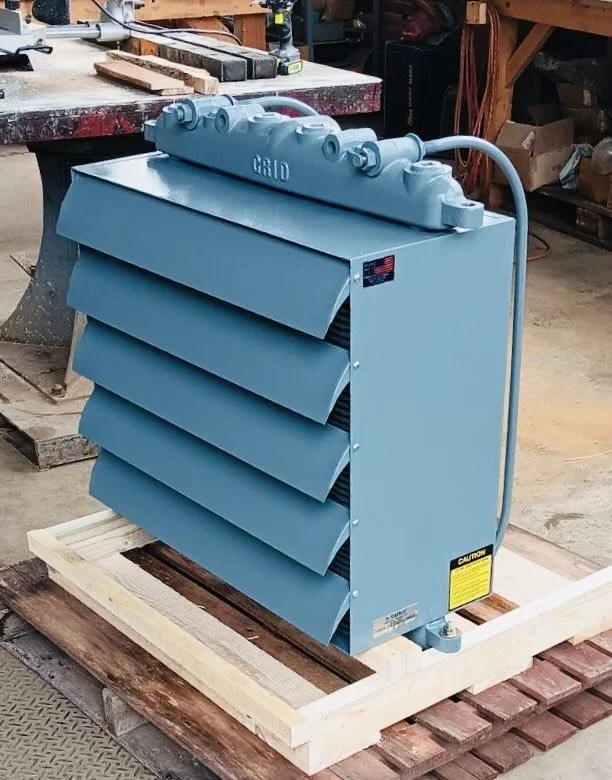
Horizontal unit heaters
A horizontal unit pushes heated air out across the room. That makes it a good fit for large, open areas with lower ceilings.
It also works well along outside walls, where buildings commonly lose heat. Aim the airflow toward those cold spots and the warm air can move through the space from there.
Vertical unit heaters
A vertical unit pushes heated air straight down. It is built for high ceilings and for spaces where cranes or other equipment force the heater to mount higher.
Warm air wants to rise, so a high-mounted heater has to drive air down to the floor. That downward discharge keeps the heat where people are working instead of letting it collect at the roof.
How to choose
Start with three questions:
How high will the heater mount? Lower mounting points usually favor horizontal units. High mounting points usually favor vertical units.
What is overhead? Cranes, ductwork, and racking can limit where a heater fits and where its air can travel.
Where are you losing heat? Outside walls and busy doorways may need airflow aimed directly at them.
Some facilities need both, with vertical units over the center of the floor and horizontal units along the walls.
Get help sizing your heater
Orientation is only part of the decision. You also need the right output for your space. Our 320 Heater is available in horizontal or vertical configurations, and every Grid heater is built around one-piece cast iron finned radiators, made in America since 1929.
Tell us the area you want to heat and the BTUs you need, and we can help you find the right heater. Call (330) 332-9931 or email info@castironheaters.com.